


Safety showers
Discover safety showers for rapid first-aid treatment in the event of exposure to chemicals, acids, alkalis or heat. In this category, you will find suitable body safety showers for laboratories and industrial settings.
Our safety showers
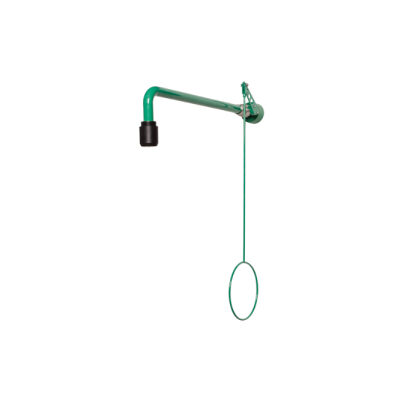

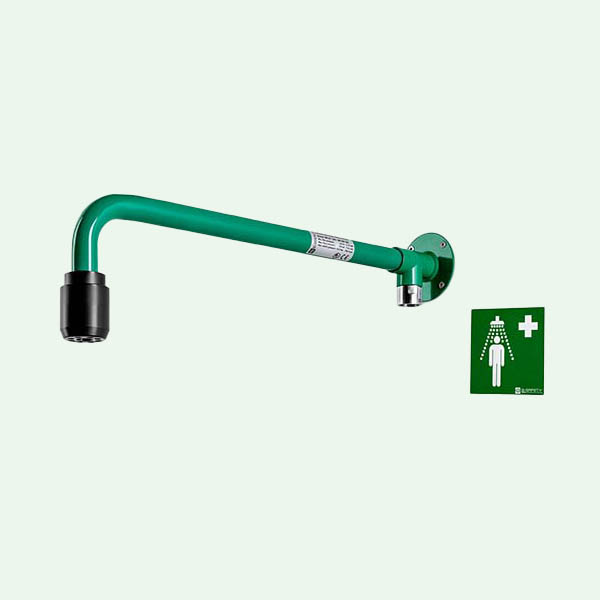
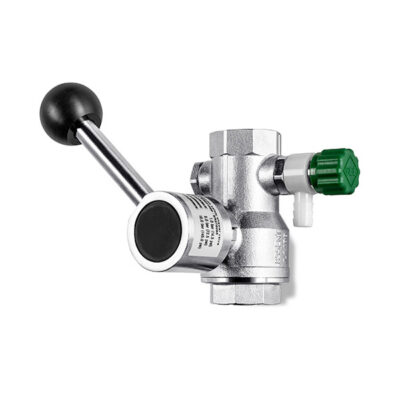
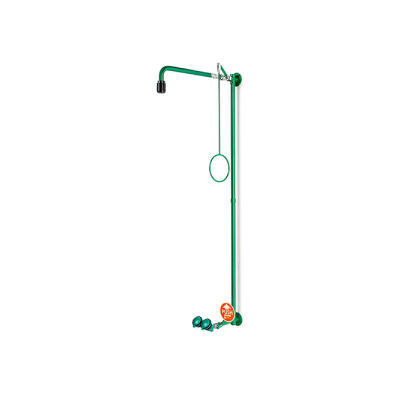
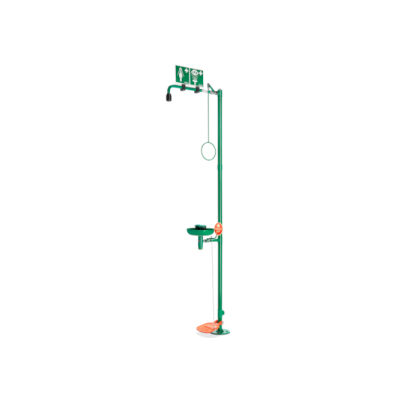
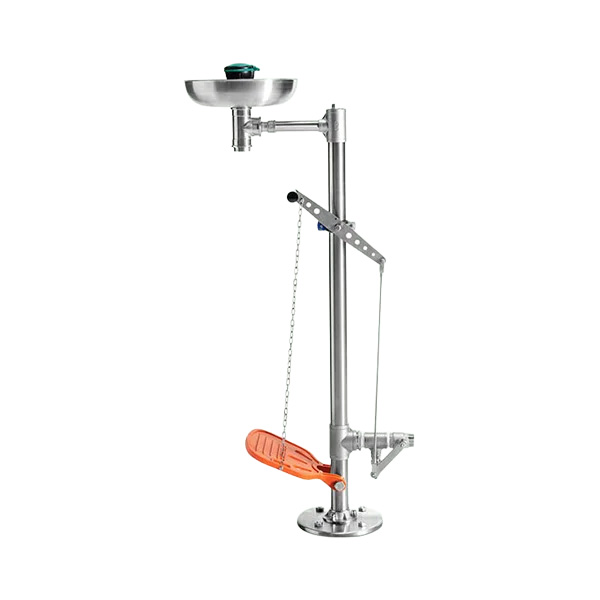
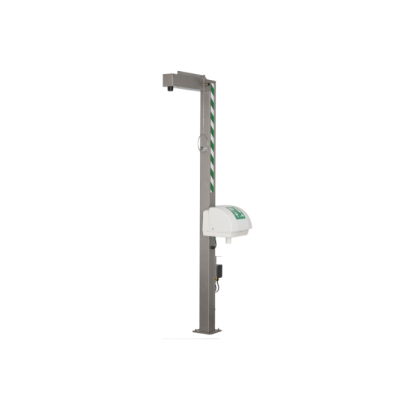
Safety showers save lives in an emergency
Frequently asked questions
What is a safety shower?
What to do in an emergency
In the event of an accident involving burns or contact with hazardous liquids or gases, it is important to:
- Rinse the affected areas of the body immediately with plenty of water!
- Remove affected clothing that is not stuck to the skin as quickly as possible!
- Depending on the severity of the chemical burn, the eyes should be rinsed for up to 15 minutes in accordance with BG guidelines!
- In case of eye injuries, hold the eyelids open while rinsing!
- Call an ambulance as quickly as possible and seek medical advice!
- Continue rinsing during transport and in the first-aid room! This requires eye wash bottles, which you can find in our online shop at the following link: https://b-safety24.com/augenspuelflaschen.html
- If possible, inform the doctor about the substance that caused the injury and let them know about any possible countermeasures
What standards and guidelines apply to safety showers?
In Europe, safety showers must comply with EN 15154-1:2006 (Body Showers in Laboratories) and EN 15154-5:2019 (Full-body showers for locations other than laboratories / Replacement for DIN 12899-3:2009). In the United States, Safety showers must also comply with ANSI Z358.1-2014. Other national standards may need to be observed. In addition, it is possible that company-specific standards must be taken into account when selecting an eye shower or safety shower.
What flow rate is required for a Safety shower?
ANSI Z358.1-2014 requires a flow rate of at least 75 liters per minute or 20 GPM for all body safety showers. In comparison, EN 15154-5:2019 defines hazard classes I, II, and III and assigns them flow rates of 30–60, 60–100, and more than 100 liters per minute, respectively.
B-SAFETY body safety showers are available with different flow rates depending on the hazard class. In laboratory settings, for example, a flow rate of 50 liters per minute has become standard. In industrial settings, a flow rate of 75 liters per minute has proven effective, as the quantities of hazardous substances involved are sometimes much higher.
What should you consider when choosing the right safety shower?
Specific requirements for safety showers are determined by the risk assessment for your facility. The number of safety showers required can also be determined from this assessment. It is possible that company-specific standards must be taken into account.
Safety data sheets for the hazardous substances used usually provide further guidance on identifying the chemical risk and associated hazards. They provide information on recommended decontamination procedures required for the chemicals in question in the event of an incident or skin contact. For example, if ammonia comes into contact with the skin, the affected area must be rinsed with warm water (25°C to 30°C) for at least 15 minutes.
What should be considered when selecting a location for a Safety shower?
In general, Safety showers must be installed as close as possible to the at-risk work area. Choose a location that can be reached quickly from the hazardous areas. The access to the shower must be kept clear at all times. The area around the shower must always be well lit—even during a power outage. The shower itself must be marked with signs that are clearly visible from all sides.
When considering a potential location for a Safety shower, the following factors should be taken into account:
- What is the ambient temperature at the planned location?
- Is it possible to collect potentially contaminated water?
- Is there a reliable water supply with sufficient water pressure?
- Is the shower to be installed in a potentially explosive atmosphere?
- Have you taken electrical requirements—such as ATEX—into account?
- Can the shower be turned off for maintenance work?
When using the safety shower, the escaping water should not cause any consequential damage. If necessary, the escaping shower water must be safely diverted using enclosures and drip pans.
Chemicals & Lyes
Neutralization of Hazardous Substances
Heat & Flames
Rapid Cooling for Burns
Decontamination
Rinsing Pollutants Off the Body
Industry & Laboratory
Suitable for any hazardous area
Do you have any questions or would you like some advice?
We’re happy to answer any questions you may have and look forward to hearing from you.