


Technical information on safety showers
A concise guide to guidelines, standards, and practical tips for the planning, installation, and use of emergency showers and eye showers.
1. Safety showers save lives
Accidents can happen anywhere. People who handle aggressive chemicals such as acids, alkalis, solvents, and flammable substances are particularly at risk. Eye injuries can also occur quickly in dusty areas or where wood or metals are being processed.
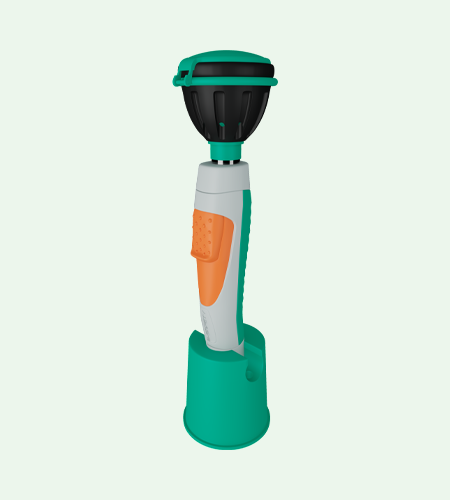
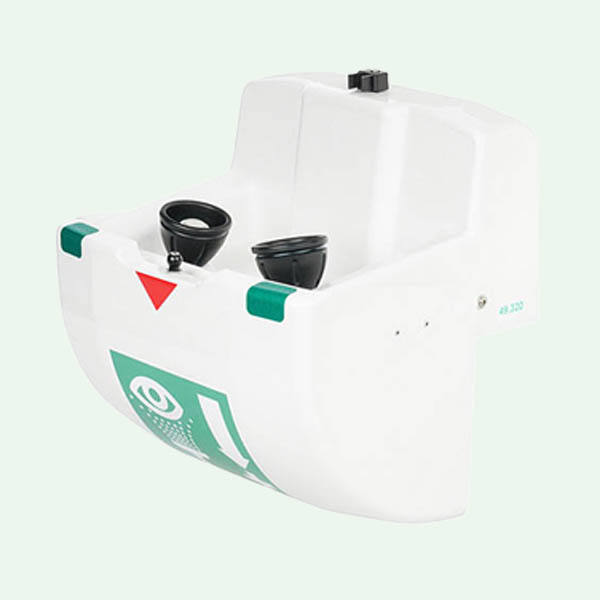
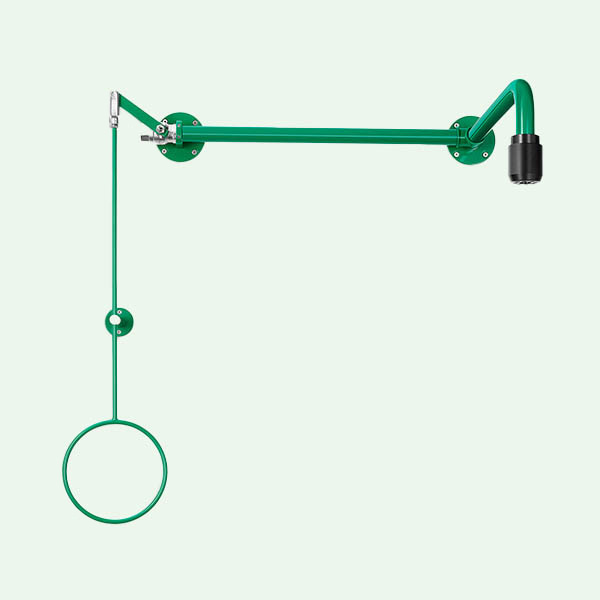
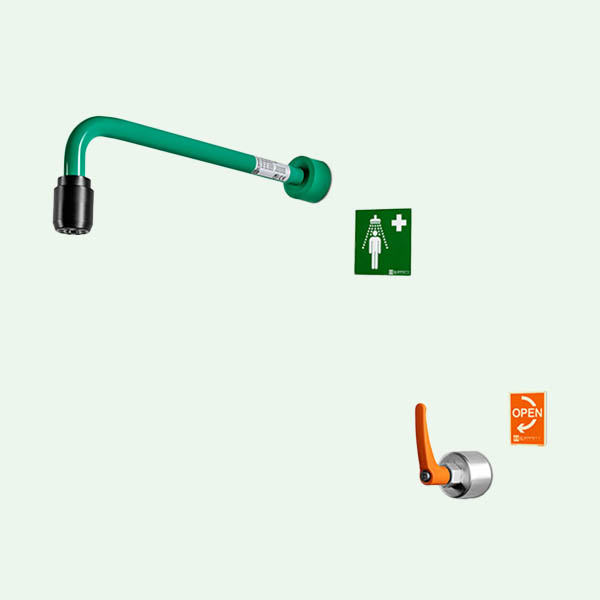
In the event of burns or contact with chemicals, body showers located directly at the workplace are essential for providing prompt first aid. Eye showers allow you to immediately rinse foreign objects, dust, or chemicals out of the eyes following an incident.


Typical sources of danger in laboratories and industry include, for example:
- Workplaces with toxic or corrosive substances
- Ovens, open flames, and areas with hot substances (steam, boiling water, oil, grease)
- Chip and Dust Generation During Machining Processes
- Areas with hazardous dust, gases, or vapors
Workplaces like these can be found almost everywhere: in laboratories, warehouses, workshops, kitchens, the chemical industry, the metal industry, or on ships. Burns, scalds, and chemical burns are among the injuries for which immediate first aid is crucial to minimizing damage. The sooner one of these injuries is treated with plenty of water, the sooner damage to the underlying tissue can be prevented!
2. Installation Recommendations for Safety showers and Eye showers
Much harm and suffering can be prevented if a sufficient number of hazardous workstations are equipped with appropriately designed Safety showers for the eyes and body. In the event of an accident, every second counts; therefore, it is crucial that the Safety shower be located at least in the same room as the hazardous workstation. Distances greater than 10 meters should be avoided.
Thanks to B-SAFETY’s highly versatile modular system, it is easy to find the right solution for any installation situation. The components are designed so that they can be easily combined in a wide variety of ways—even retroactively. For wall-mounted Safety shower combinations, installation is very straightforward, as only one Water inlet is required for both fixtures, which can be located either at the top or the bottom. Learn more under ClassicLine Safety shower combination with Eye-/face wash unit, Basin, and Cover. In warehouses and industrial buildings, freestanding combinations are often used when wall mounting is not possible or the distance to the hazardous work area is too great. You can find the freestanding safety shower under PremiumLine Body safety shower with Eye-/face wash unit, catch basin, and cover.
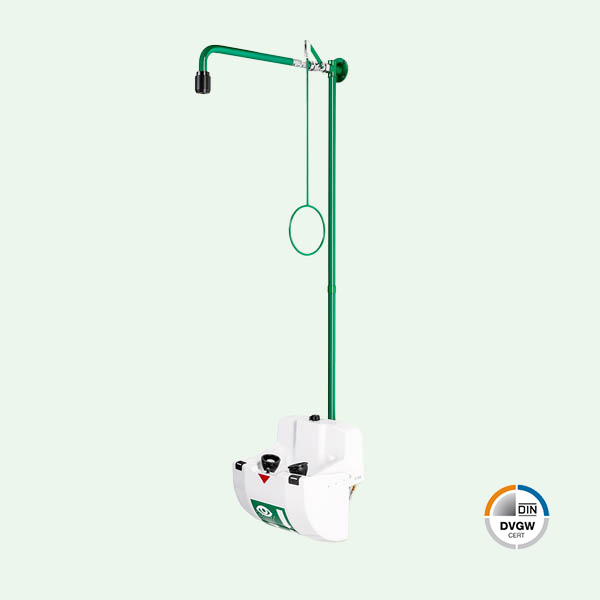
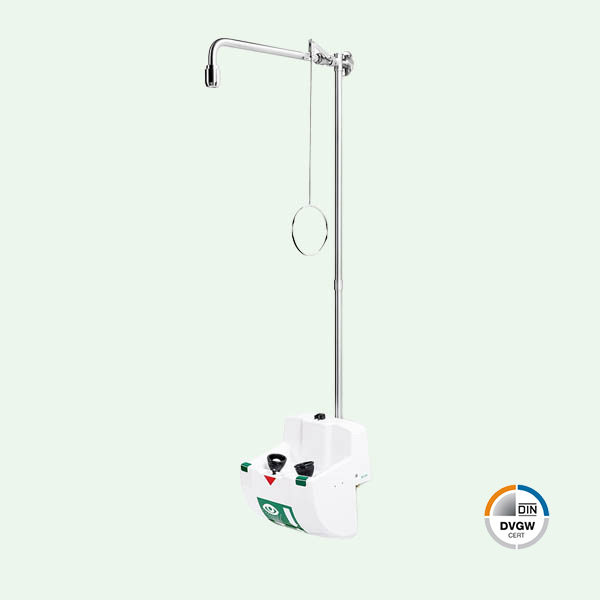
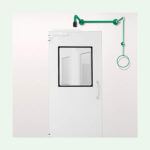
Normally, it is sufficient to provide one Safety shower for multiple workstations. Easily accessible, central locations are ideal for this purpose. The area around a sink, for example, is a suitable location for installing Eye showers. Full-body showers can be installed above doors, which saves space while also ensuring a central location.

3. Applications of safety showers and eye showers by Hazardous Substance
| Gefahrstoffe | Körperdusche | Augendusche | Spüldauer |
|---|---|---|---|
| Säuren (allgemein) | Ja | Ja | - Augen mind. 10 Minuten mit viel Wasser spülen, danach sofort zum Augenarzt - Haut mind. 10 Minuten mit viel Wasser spülen, benetzte Kleidung entfernen, Notarzt rufen |
| Laugen (allgemein) | Ja | Ja | - Augen mind. 10 Minuten mit viel Wasser spülen, danach sofort zum Augenarzt - Haut mind. 10 Minuten mit viel Wasser spülen, benetzte Kleidung entfernen, Notarzt rufen |
| Ammoniak | Ja | Ja | - Augen und Haut mit viel Wasser spülen - Benetzte Kleidung entfernen - Nach Einatmen Frischluft |
| Arsenwasserstoff | Ja | Ja | - Augen und Haut mit viel Wasser spülen - Nach Einatmen Frischluft oder Sauerstoff |
| Bariumverbindung | Ja | Ja | - Augen und Haut mit viel Wasser spülen - Nach Verschlucken Erbrechen anregen und 2 bis 5%ige Natriumsulfatlösung verabreichen |
| Benzol | Ja | Ja | - Augen mit viel Wasser spülen - Haut mit Wasser und Seife waschen - Nach Einatmen Frischluft - Nach Verschlucken Medizinalkohle |
| Brom | Ja | Ja | - Augen und Haut mit viel Wasser spülen - Nach Einatmen Frischluft |
| Chlor | Ja | Ja | - Atemschutz des Helfers! - Augen mit viel Wasser spülen - Haut mit Wasser und Seife waschen - Nach Einatmen Frischluft |
| Chlorwasserstoff | Ja | Ja | - Augen und Haut mit viel Wasser spülen - Kontaminierte Kleidung entfernen - Nach Einatmen Frischluft |
| Chromate | Ja | Ja | - Augen mit viel Wasser spülen - Haut mit Wasser und Seife waschen - Nach Verschlucken Erbrechen auslösen |
| Jod | Ja | Ja | - Augen mit viel Wasser spülen - Haut mit Wasser und Seife waschen - Nach Einatmen Frischluft - Nach Verschlucken Milch trinken lassen |
| Methanol | Ja | Ja | - Augen und Haut mit viel Wasser spülen - Nach Einatmen Frischluft bzw. Sauerstoff - Nach Verschlucken Erbrechen anregen, Medizinalkohle verabreichen, Arzt! |
| Schwefelwasserstoff | Ja | Ja | - Atemschutz des Helfers - Augen und Haut mit viel Wasser spülen - Nach Einatmen Frischluft, besser Sauerstoff - Ärztliche Überwachung |
| Silbernitrat | Ja | Ja | - Augen und Haut mit viel Wasser spülen - Nach Verschlucken 10% Kochsalzlösung trinken, Erbrechen provozieren, mit viel Wasser Mund und Rachen ausspülen |
| Toluol | Ja | Ja | - Augen mit viel Wasser spülen - Haut mit Wasser und Seife waschen - Nach Einatmen Frischluft - Nach Verschlucken Gabe von Medizinalkohle |
4. Standards and Guidelines
4. Applications of Safety showers and Eye showers According to Standards – Laboratory Guidelines
Excerpt from: “Working Safely in Laboratories”
Guidelines for Laboratories BGI/GuV-I 850-0 (Excerpt):
6.6 Safety showers
6.6.1 Emergency Body Showers
6.6.1.1 Water Flow Rate and Location
In laboratories, emergency body showers supplied with water—preferably of drinking water quality—must be installed at the exit. They must be capable of immediately flooding all areas of the body with sufficient volumes of water. This requires a minimum of 30 liters of water per minute.
…
A personal safety shower should be reachable from any location in the laboratory within a maximum of 5 seconds. The exact location of the safety shower depends on the results of the risk assessment.
…
6.6.1.2 Signage
The location of emergency safety showers must be marked with the “Safety shower” emergency sign. Access must be kept clear at all times.
…
6.6.2 Eye Wash Stations
6.6.2.1 General Requirements
In laboratories, emergency eye wash stations supplied with drinking-quality water—preferably located near a body shower or sink—must be installed so that they are immediately accessible from every workstation. They should be capable of immediately flushing both eyes with a sufficient volume of water.
…
Eye-wash bottles containing sterile rinsing solution are permitted if running drinking water is not available.
…
It must be possible to reach the victim quickly and easily. The eyes must be rinsed with the eyelids held wide open to ensure that all chemical residue is removed. Rinsing must be continued for a long time—at least 10 minutes as a general guideline—and a medical examination of the eye must be performed immediately.
…
6.6.2.2 Location and Labeling
The location of emergency eye wash stations must be marked with the “Eye Wash Station” emergency sign. Access must be kept clear at all times.
…
7.2 Safety showers
The employer must ensure that body and eye wash stations are checked for proper functioning at least once a month by a person designated by the employer.
During the inspection, in addition to the flow rate, the water distribution pattern of the showerhead and the water quality must be assessed by visual inspection.
Otherwise, there is no guarantee that the control valve will remain smooth-operating or that the shower head will remain unobstructed. Frequent water changes also help prevent contamination and bacterial growth in the water line.
It is recommended to use emergency eye showers more frequently.

5. Eye showers – EN 15154-2:2006 (Excerpt)
1. Scope of Application
This European Standard is a product standard that specifies performance requirements for Safety eye showers connected to the water supply. It applies only to Safety eye showers with a water inlet.
Requirements have been established regarding the function, installation, adjustment, and labeling of eye showers, as well as requirements for the installation, operating, and maintenance instructions to be provided by the manufacturer.
….
4. Performance
4.1 Water Flow Rate
Eye showers with a water inlet must be designed to deliver a constant flow rate of at least 6 l/min at a flow pressure to be specified by the manufacturer; the flow pressure must be indicated and measured at the point where the eye shower is connected to the water supply. The eye shower must maintain this water flow for at least 15 minutes.
The water velocity must be low enough so as not to injure the user.
The outlet(s) must be protected from airborne contaminants. Regardless of the type of protective device, it must be removable without any additional action on the part of the user when the Eye shower is in use.
4.2 Beam Height
The jet produced by the outlet(s) must spray to a height of at least 100 mm and no more than 300 mm, measured from the center of the outlet(s), before it tips over or collapses.
4.3 Water Quality
Eye showers must use drinking water or water of similar quality in accordance with European or national standards.
The materials used to construct the eye showers must not affect water quality or contaminate the water supply.
4.4 Water Temperature (for information)
Continuous and early irrigation of affected body surfaces for the recommended duration is a fundamental aspect of first aid. An important consideration when providing appropriate first-aid supplies is that the water temperature be suitable for the recommended irrigation duration. Medical guidelines recommend lukewarm water for treating chemically damaged tissue. Temperatures above 37°C have been found to be harmful to the eyes and can intensify chemical reactions in the eye or on the skin. While cold water provides immediate relief after burns or chemical exposure, prolonged exposure to water that is too cold impairs the body’s ability to maintain an adequate body temperature and may lead to premature termination of first aid. Recent information indicates that a water temperature of 15°C is an appropriate lower limit for lukewarm water without causing hypothermia in the user.
4.5 Filters (for information)
To prevent the accumulation of water-borne contaminants, the water supply line may be equipped with a fine-mesh filter or screen.
5. Installation Requirements
The outlet openings of eye showers with a Water inlet that are mounted in a fixed position must be designed so that they can be installed at a height of (1000 ± 150) mm above the floor level on which the user is standing; the distance from the nearest wall or obstacle must be 150 mm.
6. Shut-off valve
When operated manually, the shut-off valve must be fully open after a rotation of no more than 90° or a pull of no more than 200 mm. The force required for operation must not exceed 100 N, and the torque required for operation must not exceed 7 Nm. The shut-off valve must be fully open within 1 second using this force or torque.
….
Once opened, the shut-off valve must not close automatically. The direction of movement of the control element must be clearly recognizable and unambiguous.
….
7. Outlet openings
The eye-washing unit must be designed to provide sufficient space to keep both eyelids open while the eyes are exposed to the water jet.
Adjustments to the outlet opening(s) with regard to the jet direction must only be possible using a tool.
For maintenance purposes, the outlet opening(s) must be removable, but only with the use of a tool.
8. Information to Be Provided by the Manufacturer
The manufacturer must provide information with the eye shower regarding its installation, operation, and maintenance, as well as details on the method and frequency of maintenance inspections.
9. Labeling
The eye shower must be marked with a clear and permanent label indicating the minimum and maximum flow pressure and the maximum static pressure. The label must be affixed by the manufacturer and must include the manufacturer’s name and the model or part number.
In addition, the manufacturer must provide a safety label conforming to ISO 9864-1 that can be affixed near the Eye shower.
6. Design and Installation of Full-Body Showers in Laboratories – EN 15154-1:2006 (Excerpt)
1. Scope of Application
This European standard is a product standard that specifies performance requirements for safety body showers connected to the water supply. It does not apply to safety emergency showers in manufacturing facilities or similar areas.
Requirements have been established regarding the function, installation, adjustment, and labeling of the showers, as well as requirements for the installation, operating, and maintenance manuals to be provided by the manufacturer.
…
4. Performance
4.1 Water Flow Rate
The water supplied by the body shower must have a constant flow rate, as specified by national regulations, at a flow pressure to be determined by the manufacturer; the flow pressure must be indicated and measured at the shower’s connection to the water supply. The body shower must maintain this water output for at least 15 minutes.
NOTE: If no national or local regulations apply, a flow rate of at least 60 l/min is appropriate.
Spray pattern of a full-body shower in accordance with EN 15154-1:2006
(Dimensions in millimeters)
4.2 Water Distribution
The water distribution of the body shower must be determined using the following type-testing procedures:
At a distance of 700 mm below the shower head, (50 ± 10)% of the delivered water volume must fall within a circle with a radius of 200 mm; the water level in the individual sectors of this circle may deviate by no more than 30% from the mean value.
At this measurement height, the area into which at least 95% of the water falls must be confined to a circle with a radius of 400 mm.
The force of the water jet must be low enough so as not to injure the user.
4.3 Water Quality
For body showers, drinking water or water of a similar quality in accordance with European or national standards is required.
The materials used to build the shower must not contaminate the water.
4.4 Water Temperature (for information)
Continuous and early irrigation of affected body surfaces for the recommended duration is a fundamental aspect of first aid. An important consideration when providing appropriate first-aid supplies is that the water temperature be suitable for the recommended irrigation duration. Medical guidelines recommend lukewarm water for treating chemically damaged tissue. Temperatures above 37°C have been found to be harmful to the eyes and can intensify chemical reactions in the eye or on the skin.
While cold water provides immediate relief after burns or chemical exposure, prolonged exposure to water that is too cold impairs the body’s ability to maintain an adequate body temperature and may lead to premature termination of first aid. Recent information indicates that a water temperature of 15°C is an appropriate lower limit for lukewarm water without causing hypothermia in the user.
5. Installation Requirements
5.1 Installation Height
The shower head must be designed for an installation height of (2200 ± 100) mm, measured from its lower edge to the floor level where the user stands.
5.2 Space Requirements
The clear space between the shower head’s spray path and the nearest obstacle (wall, vertical supply pipe, or similar) must form a circle with a radius of at least 400 mm.
6. Shut-off valve
When operated manually, the shut-off valve must be fully open after a rotation of no more than 90° or a pull of no more than 200 mm. The force required for operation must not exceed 100 N, and the torque required for operation must not exceed 7 Nm. With this force or torque, the shut-off valve must be fully open within 1 second.
.…
The shut-off valve must not close automatically after being opened. The direction of movement of the control element must be clearly recognizable and unambiguous.
.…
7. Shower head
Adjustments to the shower head regarding the spray direction or water distribution must only be possible with a tool.
The shower head must drain automatically between the shut-off valve and the outlet. For maintenance purposes, the shower head must be removable, but only with the use of a tool.
8. Information to Be Provided by the Manufacturer
The manufacturer must provide instructions for the installation, operation, and maintenance of the emergency shower, as well as information on the method and frequency of maintenance inspections.
9. Labeling
The shower must be marked with a clear and permanent label indicating the minimum and maximum flow pressure and the maximum static pressure. The label must be affixed by the manufacturer and must include the manufacturer’s name and the model or part number.
In addition, the manufacturer must include a safety label compliant with ISO 3864-1 that can be affixed nearby.
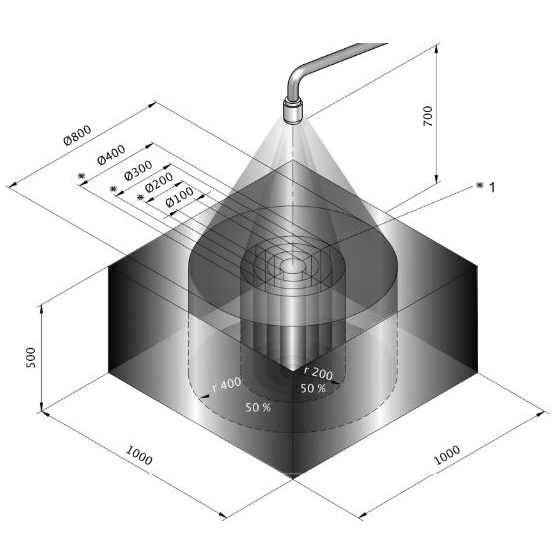
Spray pattern of a body shower in accordance with EN 15154-1:2006
(dimensions in millimeters)
7. Hot Water Supply for Emergency Eye Showers and Eye Wash Stations
The supply of hot water to emergency and eye showers is a critical factor. According to EN 15154-1:2006 and EN 15154-2:2006, a flushing duration of at least 15 minutes is required to remove harmful substances as thoroughly as possible. In the case of highly corrosive chemicals that penetrate deep into the skin, a treatment time of up to 60 minutes may even be required.
Prolonged exposure of the skin to water that is too cold (below 15°C) can lead to hypothermia. It is important to note that any water temperature below 32°C causes body temperature to drop steadily. Particularly critical is the fact that water draws heat from the body up to 25 times faster than air does. The body can become hypothermic after just a few minutes—and the situation becomes critical when the body temperature drops below 32°C!
Temperatures above 37°C have been found to be harmful to the eyes and can intensify chemical reactions in the eye or on the skin.
Medical guidelines recommend a lukewarm temperature—between 15 and 37°C—as optimal for treating tissue affected by chemicals. For this reason, EN 15154-1:2006 and EN 15154-2:2006 recommend that emergency showers and eye showers be supplied with water at a temperature between 15 and 37°C.
8. Checklist / Maintenance of Safety Showers and Eye Showers
9. What to Do in an Emergency
In the event of an accident involving burns or contact with hazardous liquids or gases, it is important to:
Rinse the affected areas of the body immediately with plenty of water!
Remove affected clothing that is not stuck to the skin as quickly as possible!
Depending on the severity of the chemical burn, the eyes should be rinsed for up to 15 minutes in accordance with BG guidelines!
In case of eye injuries, hold the eyelids open while rinsing!
Call an ambulance as quickly as possible and seek medical advice!
Continue rinsing during transport and in the first-aid room! You’ll need eye-rinse bottles for this, which you can find in our online store at the following link: https://b-safety24.com/augenspuelflaschen.html
If possible, inform the doctor about the substance involved in the injury and advise them of possible countermeasures!
Visit our YouTube channel for more information: https://www.youtube.com/@B-SafetyGmbH
This demonstration video shows an example of how to use a body safety shower in an emergency:
You are currently viewing a placeholder content from YouTube. To access the actual content, click the button below. Please note that doing so will share data with third-party providers.
More Information
Do you have any questions or would you like some advice?
We’re happy to answer any questions you may have and look forward to hearing from you.